RoboWork Workshop
Organizers
Vedant Dave M.Sc.*, Prof. Dr. Elmar Rueckert#, Prof. Dr. Thomas Thurner+, Siegfried Altmann", Yassine El Manyari~
*# Chair of Cyber Physical Systems, TU Leoben
+ Automation & Measurement, TU Leoben
" CEO of Rosendahl Nextrom
~ Humanoid AI Robot Program, Rosendahl Nextrom
Motivation
Automation and industrial robotics have fundamentally transformed production and logistics technologies over recent decades. The ongoing digitalization driven by Industry 4.0, IoT connectivity, high-fidelity simulations, and digital twins is creating increasingly integrated and fully connected industrial environments. At the same time, advances in machine learning, artificial intelligence, sensing, microelectronics, and embedded computing technologies are enabling a new leap forward in humanoid robotic systems.
Many industry experts predict that humanoid robots will significantly shape the future of industrial workplaces and influence everyday private life as well. Early engagement with this emerging technology is therefore crucial for securing the long-term competitiveness of manufacturing and logistics companies.
The RoboWork Workshop provides a platform to discuss key questions, existing challenges, technological solutions, and practical experiences relevant to deploying humanoid robot systems in industrial settings. The goal is to foster exchange between researchers, developer communities, and industrial partners, to consolidate knowledge, and to support the safe, effective, and economically viable introduction of humanoid robotics in industry.
The primary objective of the workshop is to facilitate interdisciplinary exchange between leading communities in:
- Artificial Intelligence
- Robotics and humanoid systems
- Computer Vision
- Simulation and Digital Twins
- Industrial automation and system integration
as well as industrial partners who are already testing humanoid robots or planning their deployment.
The workshop aims to strengthen dialogue, create synergies, and identify pathways for integrating humanoid robotic systems safely, at scale, and in a practical manner into industrial value chains.
Topics
The workshop addresses a broad range of current and emerging technological, organizational, and industrial challenges. Key topics include:
- AI methods for humanoid robotics
- Motion learning methods (Reinforcement Learning, Imitation Learning Foundation Models, Diffusion Policies, VLAs)
- Tactile, visual, and acoustic sensing for humanoid robots
- AR/VR technologies for development, training, and teleoperation
- Simulation of industrial environments and digital twins
- Safety requirements, hazard assessment, standards, and compliance
- Trustworthy AI and regulatory aspects (including the EU AI Act)
- Industrial use cases and application requirements
- Insights from pilot projects and real-world test environments
- Scalability, reliability, and component availability
- Challenges and opportunities in integrating humanoid robotic systems into industrial processes
Program
The workshop is organized as a half-day session with a total duration of three hours. It can take place either:
- 09:00-12:00
- or
- 14:00-17:00
Presentations will run for 15 to 20 minutes and will be followed by approximately 10 minutes of discussion with participants.
Submissions may be made as short papers (2–4 pages) or as full papers.
All accepted contributions will be presented during a poster session. A selection of outstanding or highly relevant submissions will additionally be invited for oral presentations in the workshop program.
Confirmed Speakers
All accepted contributions will be presented during a poster session. A selection of outstanding or highly relevant submissions will additionally be invited for oral presentations in the workshop program.
Keynote Speakers
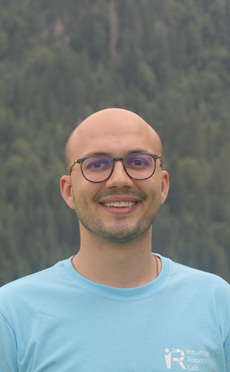
Prof. Dr. Rudolf Lioutikov, KIT, Germany
Rudolf Lioutikov is a Tenure-Track Professor at the Karlsruhe Institute of Technology and leads an Emmy Noether-funded research group, the Intuitive Robots Lab, which focuses on robot learning methods for intuitive and accessible human–robot interaction.
Prior to joining KIT, he was an Assistant Professor of Practice at the University of Texas at Austin and a Postdoctoral Fellow in the Personal Autonomous Robotics Lab. He received his Ph.D. with distinction from TU Darmstadt, where his dissertation was recognized as a finalist for the Georges Giralt PhD Award.
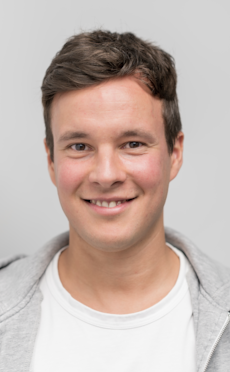
Prof. Dr. Dieter Büchler, University of Alberta & MPI for Intelligent Systems
Dieter Büchler is an incoming full professor at JKU Linz and currently serves as an assistant professor in the Computing Science department at the University of Alberta while also leading a research group in the Empirical Inference department at the Max-Planck Institute for Intelligent Systems in Tübingen, Germany. Dieter holds a Canada CIFAR AI chair and is an Alberta Machine Intelligence (Amii) fellow. He earned a Ph.D. in computer science from the TU Darmstadt under Jan Peters and Bernhard Schölkopf and performed the research at the MPI for Intelligent Systems.
While pursuing his PhD, Dieter interned at X, the Moonshot Factory (formerly Google X). He holds an M.Sc. in Biomedical Engineering from Imperial College London and a B.E. in Information and Electrical Engineering from HAW Hamburg with generous support from Siemens. His mission is to achieve human performance in athletic, rapidly changing, uncertain, and high-dimensional tasks with physical robots. His research group develops learning approaches for complex systems, like soft and muscular robots, which can excel in these demanding domains. The group also studies how the robotic body influences the acquisition of robotic skills.
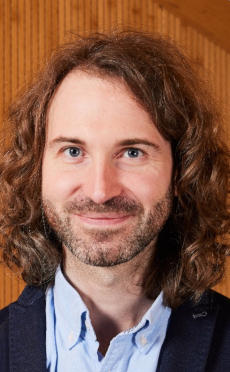
Prof. Dr. Kevin Sebastian Luck, Vrije University, Amsterdam
Kevin Sebastian Luck is a tenured Assistant Professor at Vrije Universiteit Amsterdam within the Computational Intelligence (CI) Group, where he leads the CI Robot Learning Lab. His research focuses on the intersection of deep reinforcement learning and robotics, with a specialized interest in the co-adaptation of robot morphology and behavior to develop AI-assisted design methodologies and embodied intelligence.
He earned his PhD in Computer Science from Arizona State University in 2019, following studies at TU Darmstadt. Prior to his current appointment, he held postdoctoral and research stints at the Finnish Center for Artificial Intelligence (FCAI) at Aalto University, the University of Edinburgh, Google DeepMind, and Facebook AI Research. Kevin is a member of the ELLIS society and frequently serves the academic community, for examples as an Editor for IROS and co-organizer for the European Workshop on Reinforcement Learning.